Thursday, May 6, 2010

Rock Chic

by Mathilde Jansson

A style that I have, for a long time, people wearing on the street and in editorial is leather jackets, boots, layers of worn-out t-shirts and shirts, hats, converse, skinny jeans, studded belts etc. Clothes that lends the wearer attitude and somehow they fill the air around them with coolness. It is not only young people that you see wearing this style but even the older generation who where young in the 1950’s and 60’s, men as well as women. It is a Style that I find is closely related to Rock music, where this style is commonly seen and worn by artists.

In this essay I will look into where this style was born, who are the big influences, how it has been carried forward and developed and where we can see it today. To explain this style further, we will go back in time, back to the 1950’s where this style started. In 1954 Marlon Brando starred in The Wild One with his crew of motorcycle riders. They were all dressed in black leather jackets, jeans and boots and Marlon Brando became a hero inspiring the young audience.

This image of Marlon Brando as the young biker became the popular image of a classic American rebellion. The image of the biker slowly went from a villain as they were seen as in the 1940’s to becoming a hero for the younger population, carrying values such as rebellion and nonconformity. It was a way for the young to differentiate themselves from the older generation.

Furthermore, this youthful rebel American also became a ground for the musician’s choice of clothes. They expressed themselves not only through their music but their style was equally important for their image and for their opinions to be perceived by the audience.

Debbie Harry

As Josh Sims wrote in his Rock Fashion “Fashion helped rock stars define their rebellion, revolution, teen angst, sex and theatricality, and thus helped define it to their fans.” They created the style they wanted, often vulgar or extreme or reworked from another style. Like The Beatles for example, the started out as greasy rockers all dressed in black leather jackets. When the 1960s came, they cut their hair in mode style haircuts and introduced slim neat suits in to the rock style. As soon as an artist change so does the audience.

The style of rock musicians has changed with the decades and with fashion, style evolves and artists find ways to try to look individual. But I feel there are always elements that remain within the style of rock. Like leather jackets, skinny jeans, boots, shirts etc. Like the clothes that Marlon Brando popularized.

There are a lot of iconic rock musicians that are worth mentioning, like Elvis, Jim Morrison, David Bowie, Bryan Ferry, Freddy Mercury, Lindsey Buckingham, Steve Nicks and modern artist like Liam and Joel Gallagher of Oasis, The Kooks and Nina Persson of The Cardigans are just some examples. However, what I have just described as rock fashion has not fallen away from rock music: it is still closely related to music. The people that I have interviewed for this essay, a lot of them my friends, have all had the same answer to the question if music important for you and the way you dress, all of them said yes. A lot of them said that there were no specific artist that they had held as a style icon, but the ones that did most often said a rock musician from the 1960s or 70s such as Mick Jagger, Debbie Harry, Bowie or some of the contemporary musicians such as John Mayer and Brandon Flowers of The Killers, Pete Dorherty amongst others.

More or less, music tends to group people together. People with the same taste in music seems to group and create somewhat of a subculture, where their world circles around music and you gather at the same clubs or bars to see specific DJs. Values, priorities and visions are shared therefore a common way of dress is normal if not unconsciously obvious in the sense that you think alike.

Redefining Masculinity

by Katherine Wang

Photo by Hedi Slimane for Vogue Hommes Japan

Throughout time men have been known as the warriors of society. From historical rulers and leaders to modern day CEOs and father figures, males have been conditioned by society to be tough, aggressive, and dominating. These traits, among others that come to mind when imagining your cliché, mythical superhero are what defines masculinity. There are variations of how to portray masculinity among different cultures that would easily cause the Western male to question his sexuality. Western society had strictly defined the line between male and female identity through the tailored suit to rugged jeans. However, until recently, the fine line that so clearly separated the genders had become progressively obscure through daring gender-identity exploration and new forms of presentation that really pushed the envelope of masculinity.

Photo by Karl Lagerfeld tribute to Helmut Newton featuring model Baptiste Giabiconi

Jean Paul Gauthier SS 2008, Silver metallic skirt draped in Egyptian style

Image credit: The Sartorialist


Feline Enticement

by Lauren Yi

There is a consistent appearance of animal prints from leopard spots, snakeskin, and tiger stripes, especially when designers took a walk on the wild side for pre-fall 2010. Whether it’s an accent accessory or a full-on statement, cat inspired prints have been in constant existence and allow women to achieve a sleek, sexy, and powerful look.


As stated from Merriam-Webster Dictionary, the adjective feline has two definitions:
1. of relating to, or affecting cats or the cat family
2. resembling a cat as: a) sleekly, graceful b) sly, treacherous, stealthy
Enticement is a transitive verb that means to attract artfully or adroitly or by arousing hope or desire. Together they communicate the following values:
Wild
Desire
Temptation
Persuasive
Seduction
Exotic
Sexy
Savage
Aggressive
Bold
Daring
Power
Independent
Outgoing
Attention
Sleek
Chic
Secretive

We see these messages translated through fashion worn from everyday people on the streets to celebrities on the red carpet. World re-known singer Rihanna, is a perfect example of a strong, sexy, hot female stealing the spotlight from all. Her origin in Barbados gives her an exotic and unique difference from other American singers, while she also relates back to her wild side through tight clothing of leopard and cheetah prints. Her song Rude Boy which is a Jamaican and animal themed video, portrays a bad girl who wants a man to meet her physical needs and “get it on” with her.


The relation of cats as a sexy dark creature also stems off of the famous comic character, Catwoman who is a mysterious burglar and jewel thief, revealed at the end of the story to be a young, attractive woman.

Scholarly experts recognize these values represented by cat-print clothing as well. Elizabeth Rouse claims the same belief in her writing Why do people wear clothes? (pp. 123-125). She includes quotes from theorists Rudofsky and Lanver who reinstate the idea that these clothes serve to display the body and exhibit it in order to gain admiration.


It seems that man’s and animal’s clothes serve much the same purpose – sexual selection. Only the roles of the sexes are reversed. In the animal kingdom it is the male who infatuates the female with his gorgeous garb. She falls for his looks rather than his strength and aggressiveness. In human society, this is not the case. She has to track and ensnare the male by looking seductive. To prevent the male from escaping, she has to keep him perpetually excited by changing her shape and colours by every means, fair and foul. In the traditional battle of the sexes, dress and its accessory arts are her offensive weapons…It is universally true that it is the role of the female to attract, and to be chosen on the criterion of her attractiveness, and that clothes are a key factor in this process. Their views rest on their theories about ‘human nature’ and ‘instincts.’ “

Although there are several designers who have used cat prints in their collection, Roberto Cavalli signature look is a sexy woman in wild cat print in all of his many brands.


Jil Sander is a minimalist German fashion designer who represents the binary message of conservative minimalist. Her trademark look, a contemporary, somewhat odd, New Look was originally intended for women conquering executive positions in the 1980s and consists of cut pantsuit, a slim blouse and a form-fitting coat made of luxurious fabrics in plain grey, beige, blue, black or white. She designs for women whose values would be:
Monotone
Simplicity
Plain
Strict
Humble
Clean
Traditional


Thursday, April 22, 2010

Hiding in the Dark

by Paloma Canut

Photo from Numéro 106, September 09, Photographer Sølve Sundsbø

TO HIDE: “verb. Put or keep out of sight; conceal from the view or notice of others. 2 (of a thing) prevent (something or someone) from being seen”

DARK: “with little or no light. 2 hidden from knowledge, mysterious”

The Room, Autumn/Winter 09-10. Photographer: Emilio Tini

The colour black has been attributed with several values, some of them are: darkness, mystery, comfort, power, authority… an endless list of connotations that we are all aware off and take into consideration when using this colour. However, how many people are actually trying to transmit that message through by their choice in outerwear and which message are they trying to send? Are these messages in some way connected?

The Room, Autumn/ Winter 09-10, “Fade into you” Photographer: Dobos Tamás

Black in outerwear can be used to show and let different messages shine through. These messages can all be related and set under the idea of invisibility and darkness. Black has become a uniform for everyone even though for some people it is used as a safety net, as a way of being unnoticed yet still being ‘well-dressed’; others use it in the opposite way, as a form in which they can show off who they really are. These people are trying to let the darkness inside of them shine through to the outside, trying to give light to the dark we all have and try to hide. Although, most of the people tend to use black outerwear and hide, there are many exceptions in which the objective behind the choice of colour is precisely to call for attention, to try to be exposed for everyone to see and have nothing to protect you from the view of the others. It is however our own choice, each time before we leave our house to go outside, to decide what we fill like wearing, what does our gut feeling tell us? And ask ourselves “How do YOU feel today”?

Gareth Pugh, Fall 2008, Images through Style.com

See the collaboration with SHOWstudio for AW 2009

East African Ethnicity

by Kelly P. Brett

London designer Christine Mhando of Chichia

East African Ethnicity is recognized around the globe for its unique and prominent attributes, both of which are commonly expressed through the popular usage of kangas. The values and implied messages of the kanga may differ depending on the context in which it is worn or presented. Values, such as diversity, are associated with the message in the Western context; at the same time, values such as communication and love, are associated with the message in the African context. Without deference to the specific values that are associated with it, the presence of the kanga fabric has come to represent a message of East African Ethnicity around the world.

The kanga in original form as a skirt

Above and below, the fabric modified for Western forms

Wednesday, April 21, 2010

The Dandy

by Stephanie Wu

David Slijper New York 2009 Fall, Style Magazine

The Dandy is a form of lifestyle to some and the clothing is part of that autocratic soul. The dandy was formed to not attract attention for his flamboyancy but known for his sense of style, which are simple, yet, well thought out (colour wise, placement of the shirt, play of mix and match,etc.). The dandy lives his way be it the rich or the romantic wanderer, the dandy is the well-dressed man who lives his own way of life and communicates sophistication, playfulness, and singularity. The overall form that creates the dandy is nostalgia. If one were to try to point out someone wearing something ‘dandy’, it is always referential to the past. In Post Modern Society, and specifically fashion, everything is being a mixed match giving different connotation all at the same time, which can be confusing. But in different forms, we can still identify the overall understanding of the ‘dandy’.

The Satorialist

Kooples, Pocket breast detail, Referencial to tailored clothing


See a a video about Beau Brummell here.


Tuesday, April 13, 2010

Youth & Opposition in Fashion


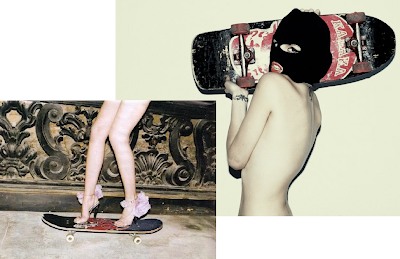
Youth & Opposition is understood as young people using fashion and forms to express rebellion. But teen rebel style is simply an index to real action, as seen below as teens in Jarkarta willingly take part in a pro-Muslim march using clothing and arms. What we normally find however in Western culture is that the rebel aesthetic is more common than action. The clothing creates "the look of a rebel," standing in for actual political action and thus it is an important study for fashion as communication.


1. What do we observe in reality & media that communicates the message? In reality young people express their opposition through personalized style that includes mixing established forms, wearing oppositional words or signs, mixing gender codes, altering hair, using aggressive adornments or choosing to opt-out of fashion all together for beliefs.


Youth however is especially attractive to fashion because of its freedom of expression and constant re-invention of style. See Diana Vreeland below speaking about surfers and skaters.


The fashion media present youth and opposition as a style.


Youth & opposition is the standard style of musicians.


Rock stars consistently make their opposition visible. Above Kurt Cobain, never in a leather jacket, set a new grunge standard for cotton t's, flannels and converse. Below Converse issued a special edition with notes from Kurt inside.

Carolyn Murphy as Courtney Love, Vogue, November 2001

2. How can we describe the message?
Youth & opposition are commonly understood terms meaning adolescent and young adult, hostile and contradictory expression. The clothing communicates the following values:
Life to live
Play
Free from responsibility
Refuting authority
Refuting Rules
Smallness
Casual
No
Stop
Change
Anti-established forms


3. What writing also expresses this message? In the posts below are readings that explain youth & opposition as well as the classic theory book featured here by Dick Hebdige.


4. What clothing forms communicate this message? Non conformist, DIY, vintage and affordable, ethnic subcultural forms, music subcultural forms, piercing, tattoos, sexual reversal forms, skin covering or revealing selective parts, appropriation/change of authority forms, counterfeiting and deliberate destruction


5. What images communicate this message? Editorials that emphasize young people acting out or rebelling, as well as showing subcultural style.

Metal Magazine, 2008 and David Stewart, Blow Up, 2008


Juergen Teller & Basilio Silva, 2009


Bruce Weber & Stylist Joe McKenna for V 36

Mario Testino, French Vogue, November 2008


6. What brands communication this message? There are a number of brands that associate with teen spirit and rebellion.


Betsey Johnson is interesting because she started after winning the Madamoiselle guest editor contest. She was considered part of the Warhol “youthquake” movement and married a member of Velvet Underground. She started her label in 1978 in New York.

Her logotype and website appear handwritten and she emphasizes her young employees.

Heatherette is an indie brand that uses Myspace as a website and has playful designs and shows.


7. What is a binary message? The suit communicates status quo.